How to Choose the Right Real Estate CRM in 2026: A Practical Buyer’s Guide for Agents
You already spent money getting the lead. You already spent time following up. Then three weeks later, you can’t remember if you texted them back — because the “system” tracking it all was a sticky note, a spreadsheet, and your memory.
That’s not a lead problem. That’s a CRM problem.
Most agents obsess over where their next lead will come from, and almost none of them stop to ask whether the system managing those leads is actually helping them close more deals — or quietly leaking them. If you’ve read our guide on turning cold leads into closings, you already know that nurturing, not just generating, is where deals are won or lost. Your CRM is the engine that makes that nurturing possible. Pick the wrong one, and even the best leads go cold.
Why Your CRM Matters More Than Your Lead Source
Here’s an uncomfortable truth: it doesn’t matter whether your leads come from cold outreach alternatives, paid ads, or one of the 15 lead generation strategies we cover here — if there’s no system reliably capturing, tagging, and following up on those leads, most of them will die quietly in your inbox.
Industry data backs this up. According to the National Association of REALTORS®’ own technology research, CRM tools are one of the top sources agents credit for their highest-quality leads, right behind social media and MLS activity (source: NAR REALTOR® Technology Survey). In other words, the CRM isn’t just admin software sitting in the background — it’s actively part of your lead generation stack, not separate from it.
The Real Cost of the Wrong CRM
Agents usually don’t “choose” a bad CRM on purpose. They inherit one from a brokerage, grab whatever’s cheapest, or keep using a spreadsheet because switching feels like a hassle. The cost shows up later, in ways that are easy to miss:
- Leads fall through the cracks because there’s no automated follow-up when you’re busy at a showing.
- You can’t tell hot leads from cold ones, so you spend equal time on someone ready to buy and someone just browsing.
- Nothing is measurable. You can’t tell whether your shared or exclusive leads are actually converting, because there’s no clean record of what happened after the first call.
- You keep paying for leads you can’t prove are working — which matters a lot once you look at what leads actually cost in 2026.
A CRM isn’t the exciting part of the business. But it’s the part that decides whether everything else you spend on leads actually pays off.
7 Things to Check Before You Pick a CRM
Skip the feature-list marketing pages. When you’re actually comparing platforms, run each one through these questions:
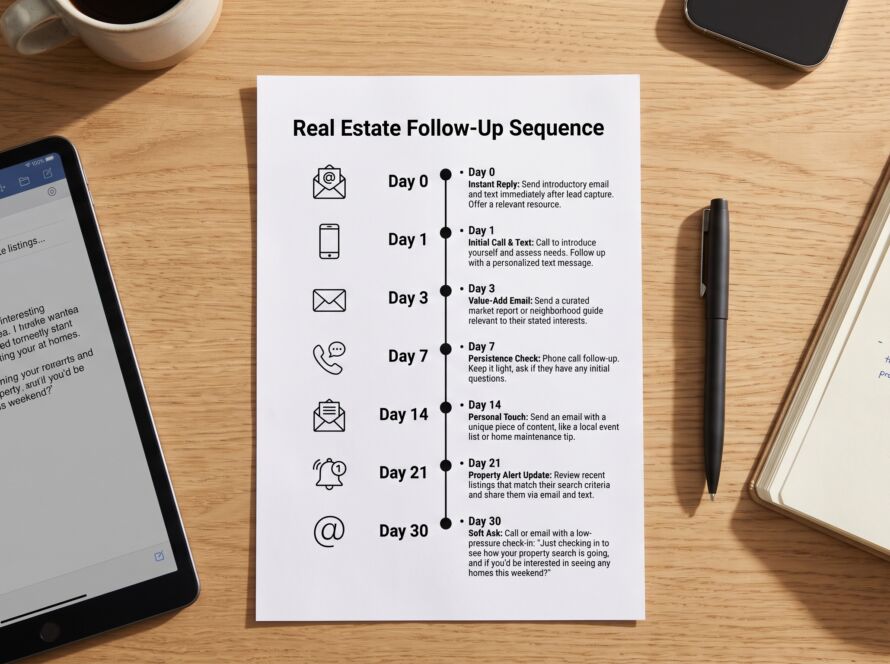
1. Does it automate follow-up out of the box? Drip email/text sequences shouldn’t require a developer to set up. If a lead doesn’t answer, the system should already be working on lead #2 while quietly re-engaging lead #1.
2. Can it separate lead sources? You need to know at a glance whether a lead came from a paid campaign, a referral, or your website — otherwise you can’t tell what’s actually generating leads worth the spend.
3. Does it support your transaction pipeline, not just contacts? Real estate deals move through specific stages — offer, inspection, appraisal, closing. A generic sales CRM built for retail or SaaS won’t map cleanly to this.
4. Is speed-to-lead actually fast in practice, not just on paper? Test it. Submit a fake inquiry through the CRM’s own lead form and time how long it takes for a notification or auto-response to reach you.
5. Will your team actually use it? The “best” CRM on paper is worthless if your agents find it clunky and quietly go back to texting from their personal phones.
6. Does it integrate with your website and lead sources? If you’re running SEO-driven lead generation or paid campaigns, the CRM needs to plug into those channels without manual data entry.
7. What does it cost at your actual lead volume, not the demo volume? Some platforms look affordable until you factor in per-seat pricing or lead caps that force an upgrade three months in.
Independent comparisons, like the one from Forbes Advisor’s real estate CRM roundup, are a useful starting point for seeing how platforms stack up on price and features — just run any shortlist through the checklist above before committing, since generic rankings can’t account for your specific lead mix.
CRM Is Half the System — Your Lead Strategy Is the Other Half
A great CRM with weak lead flow just organizes silence. A strong lead strategy without a CRM just creates chaos. The two have to work together.
If you’re still deciding how to fill the top of your funnel before worrying about what manages it, it’s worth reviewing where the best lead generation options for realtors actually stand in terms of cost and quality — free, paid, and pay-at-closing. Once leads are flowing in consistently, your CRM is what determines how many of them actually turn into closings instead of forgotten conversations.
Bringing It Together
Choosing a CRM isn’t about finding the platform with the longest feature list — it’s about finding the one that fits how your business actually generates and works leads. Get that match right, and every dollar you spend on lead generation works harder. Get it wrong, and you’re just paying to lose leads more efficiently.
If you’d rather skip the trial-and-error and get a system that combines qualified, exclusive leads with a nurturing process built to convert, that’s exactly what we help agents set up at Crenest. Get in touch with our team to see how it fits your market.